














































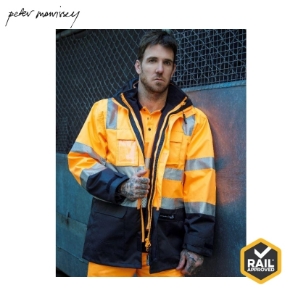
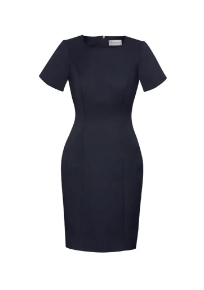
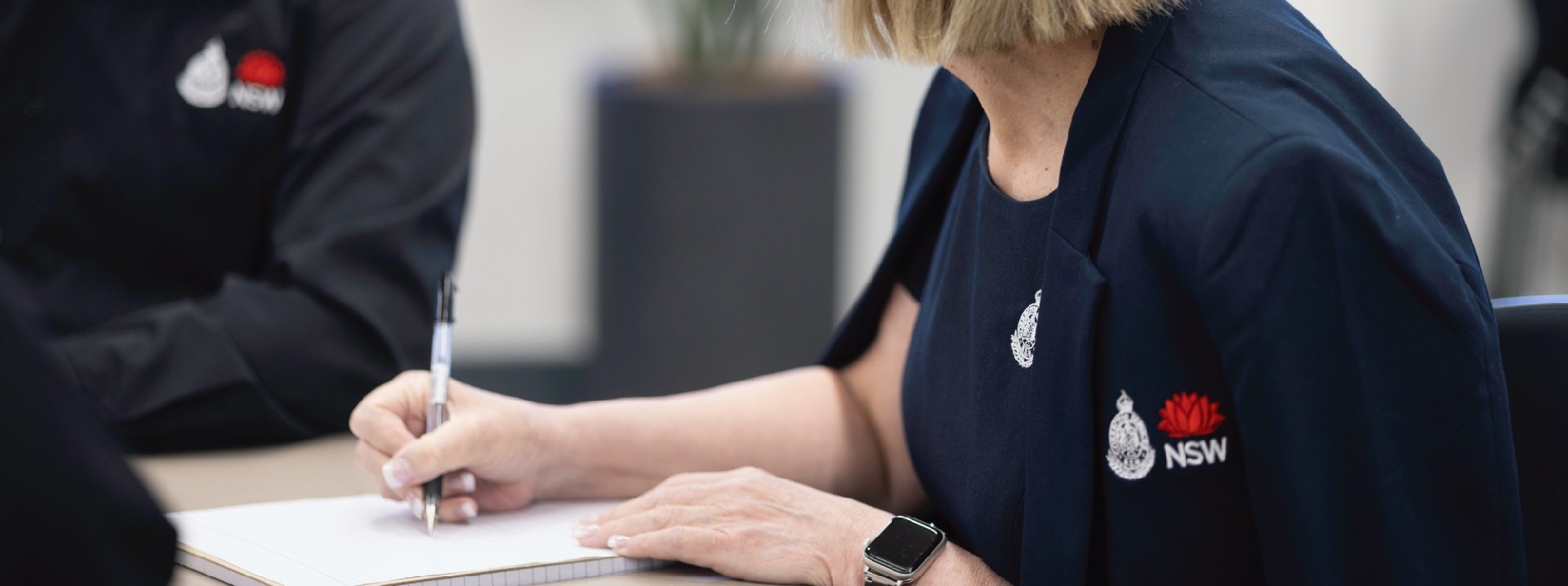
 Proudly Creating Correction Services NSW Uniforms
Most businesses spend real time choosing the right uniform. The right fabric for the Australian climate. The right fit for a diverse team. The right colour to sit within the brand palette. Those decisions matter — and getting them right takes thought.
But then comes the step that most businesses rush, default on, or don't think about carefully enough: the decoration. The embroidery or print that takes a quality garment and makes it unmistakably yours.
And here's what two decades of supplying corporate uniforms across Australia has taught us: the decoration method is often the most visible decision in the entire uniform program. It's what the client sees across the meeting room. It's what the customer notices at the reception desk. It's what a new staff member inspects the moment they put on their first piece.
Get it right and your brand lands with precision every time that garment is worn. Get it wrong — or simply default to whatever's quickest — and the result fades, cracks, puckers or sits wrong. Often within a handful of washes. And unlike a garment choice you can reconsider next season, decoration is permanent.
At Corporatewear Direct we handle embroidery and printing in-house at our Woy Woy facility, with specialist managed production for sublimation and custom garment work. We've decorated uniforms for organisations across corporate, government, healthcare, construction, retail, education and sport — from Ray White and Metricon Homes to St Vincent's Hospital Sydney, University of Tasmania, Ampol, Tennis Australia, Narellan Pools and Bunnings, among many others.
That breadth has taught us one consistent lesson: the method has to match the garment, the logo and the environment it'll be worn in. Here's how to think through that decision properly.
Embroidery — The Premium Standard for Corporate Garments
Embroidery is the decoration method most associated with professional corporate apparel — and for good reason. Thread stitched directly into the fabric creates a tactile, three-dimensional result that reads as quality the moment you touch it. It's the method that says the brand takes itself seriously.
It's the right choice for:
Polo shirts, business shirts and corporate knitwear — the structured fabric holds the stitch cleanly and the result is crisp and long-lasting.
Jackets, softshells and outerwear — particularly chest logos and sleeve branding, where the weight of the fabric supports the embroidery well.
Caps and structured headwear — embroidery on caps is durable through heavy use and weather exposure in a way that print rarely is.
Premium and client-facing garments — where the quality of the decoration needs to match the quality of the garment and the impression you're making.
Embroidery is not ideal for very fine logo detail — thin lines and small text at high stitch density can lose clarity. It's also not suited to large back prints or lightweight technical performance fabrics, where the weight of the embroidery can distort the garment. For logos with photographic complexity or gradient colour work, a different method will serve you better.
For most corporate uniform programs — business shirts, polos, corporate jackets and knitwear — embroidery is the first choice, and the standard we'd recommend.
Screen Printing — The Right Tool for Volume and Bold Brand Colour
Screen printing involves pushing ink through a mesh screen directly onto the garment. It produces vivid, solid colour results and is the most cost-effective method at volume — making it the natural choice for larger orders, promotional garments and any application where bold, high-contrast branding needs to carry across a big run of pieces.
It's the right choice for:
High-volume uniform orders — the per-unit cost reduces significantly at scale, making screen printing highly economical for large corporate rollouts.
Bold, solid-colour logos — where the design relies on strong, flat colour rather than fine detail or gradients.
T-shirts, casual workwear and event apparel — the flat surface of a jersey or cotton tee is ideal for screen print application.
Back and large-format printing — screen printing handles larger print areas cleanly where embroidery would be impractical.
Screen printing is not the right choice for photographic logos, designs requiring full-colour gradients or blends, or garments where a small quantity makes the setup cost disproportionate. It also requires careful consideration on stretch or textured fabrics, where the ink can crack or peel under movement over time.
Used in the right context — volume, bold colour, flat fabric — screen printing delivers consistent, durable results at a price point that makes large-scale uniform programs genuinely viable.
Heat Transfer — Precision for Complex Logos and Technical Fabrics
Heat transfer applies pre-printed artwork to a garment using heat and pressure. The result is a smooth, flat finish that can reproduce complex, multi-colour logos with a level of accuracy that neither embroidery nor screen printing can match. It's the modern solution for brands with photographic logos, fine detail, or garments made from technical fabrics that other methods don't suit.
It's the right choice for:
Complex or multi-colour logos — heat transfer reproduces full-colour artwork with precision, including gradients and photographic detail that would be impossible to achieve with embroidery or standard screen print.
Technical and performance fabrics — stretch fabrics, moisture-wicking materials and lightweight performance garments that won't tolerate the weight of embroidery or the rigidity of screen print ink.
Smaller and varied runs — without the setup cost of screen printing, heat transfer can be practical for smaller quantities or orders with multiple garment types.
Neck labels and internal branding — heat transfer is the standard method for replacing woven labels with branded alternatives inside garments.
Heat transfer is not ideal for garments that will be exposed to very high heat or heavy industrial washing conditions over time — in those environments the transfer can lift or fade faster than embroidery or screen print alternatives. For rugged workwear in demanding conditions, we'd typically steer toward one of the other methods.
The Mistake Most Businesses Make — And How to Avoid It
The most common decoration mistake we see is not choosing the wrong method for a garment. It's not making a conscious choice at all — defaulting to whatever's been used before, or whatever's quickest to turn around, without asking whether it's the right fit for this garment, this logo and this application.
The result is a uniform program that looks inconsistent across garment types. Embroidery on a garment that would have been better printed. Print on a fabric that distorts under ink. A logo reproduced at a size or complexity that doesn't translate cleanly to the method chosen.
These are fixable problems — but only before the order goes through. After decoration, there's no going back.
The businesses with the sharpest, most consistent uniform programs — and we've worked with enough of them to say this with confidence — are the ones that have this conversation early. They bring their logo files to the brief. They discuss the garment and the decoration in the same conversation. And they rely on a supplier who understands both sides of the decision well enough to guide them.
What to Bring to the Brief
If you're starting a new uniform program or reviewing an existing one, these three things will help us give you the best possible advice on decoration:
- Your logo in vector format (AI, EPS or PDF).
This gives us the clearest picture of what's achievable with each method. Logos supplied only as low-resolution images limit what's possible and what we can guarantee.
- The garments you're considering.
Fabric type, weight and construction all affect which decoration method performs best. If you're not sure yet, tell us the application — we'll help with the garment selection too.
- How the garment will be used and washed.
A reception uniform laundered weekly in a commercial washer has different durability requirements to a client-facing jacket dry-cleaned occasionally. The end-use informs the right decoration choice as much as the logo does.
Talk to Us Before You Decide
Decoration is not a detail to finalise at the end of the process. It's a decision that deserves the same attention as the garment choice itself — because it's the part of the uniform your clients will notice most.
We handle embroidery and printing in-house at our Woy Woy facility, with specialist managed production for sublimation and custom garment work. Across every method, we manage the quality from brief to delivery — so your logo looks exactly right, on the right garment, every time.
If you're planning a new uniform program, refreshing an existing one, or simply want advice on the best decoration approach for your brand — we'd love to help.

Corporatewear Direct — Professional. Precise. Proudly Australian.
