








































































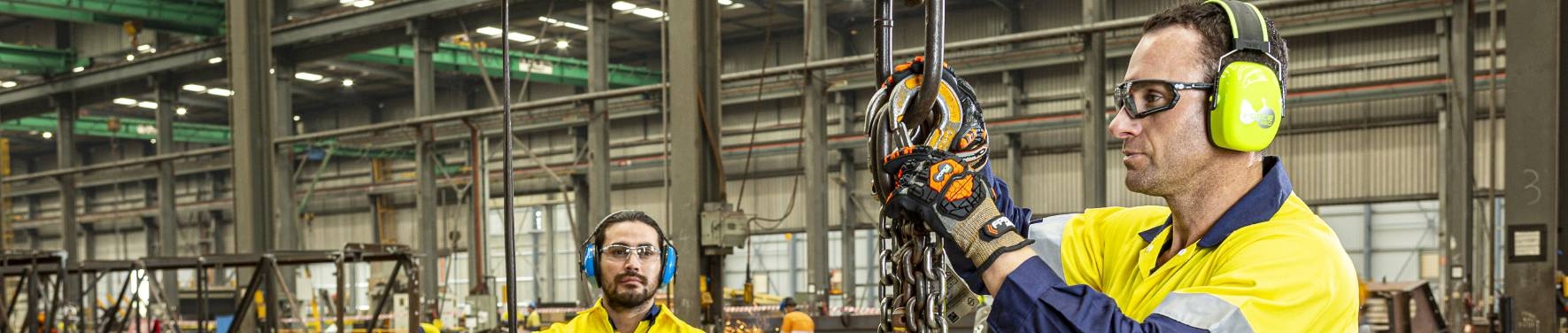
Hearing loss frequently happens due to exposure to loud environments. It can result from a singular loud noise such as an explosion of a firecracker near your ear, or more often, it can result over time from repeated exposure to loud sounds causing damage to our ears. Our ears are incredibly versatile and an essential organ in our bodies. Hence, we measure sound levels, which can assist us in understanding what things and settings can potentially harm our ears.
So How Does Hearing Loss Happen

The ear consists of three major areas: the outer ear, the inner ear and the middle ear. Sound waves travel through the outer ear, causing vibrations in the eardrum. The three small bones then amplify these waves in the middle ear before they travel through to the inner ear, passing through fluid in a snail-shaped structure in the inner ear known as the cochlea.
Attached to nerve cells in the cochlea are thousands of tiny hairs that translate these sound vibrations into electrical signals, which are then transmitted to your brain, turning signals into recognisable sounds.
Nerve destruction or damage to the hair cells that transfer sound waves within the ear may result in permanent hearing loss. If damage or destruction occurs to these critical parts of the hearing mechanism, they can be irreparable, resulting in either slight or total permanent hearing loss.
Decibel Ratings
Each day we are exposed to varying noise levels at home and in the workplace. Noise levels are measured logarithmically in decibels (dB); the higher the decibel level, the louder the noise. Decibels increase at an exponential rate; for example, if near total silence is measured as 0dB, a sound that is measured at 10dB means that it is actually ten times louder. And if a sound is calculated to be 20dB, then this is 100 times louder than near silence.
Not only does hearing loss occur on a single occasion from a loud sound such as a firework exploding near your ear, but more often, the damage results from repeated exposure to loud sounds over time. The risk of hearing loss is more significant if the sound is blaring and when there is no protective hearing equipment used or when the ears have little to no time to rest between exposures.
Sound Level Conversion (SLC80)
An SLC80 (Sound Level Conversion) rating is engaged in converting the difference between the sound level of the environment in which the hearing protection is worn and the sound level reaching the wearer's ears. Under the Australian Standard AS/NZS 1270:2002, people should not be exposed to sound above 85dB for more than 8 hours as this may cause irreparable hearing loss. A noise survey is then conducted, and the table to the right is used to select the appropriate Class of hearing protection required.

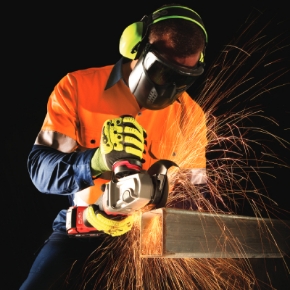
By way of example, if a person is working with a hammer drill running at 114dB, then the noise must be reduced to 85dB or less; therefore, Class 5, 29dB+ hearing protection would be essential.
The home scale below shows decibel ratings of various objects you could come into contact with, whereas the work scale indicates when these decibel levels start damaging your hearing.
The Importance of Hearing Protection
Protecting your ears at home is just as important as protecting them at work. Simple tasks such as lawn mowing can significantly affect one's hearing over time. Once our hearing is affected, it cannot be repaired.
A range of hearing protection is available in the market with varying levels of protection that can be worn over or inside the ears, like earmuffs or earplugs. They come in various sizes, colours, materials and features. It is important to know what each type of hearing protection can and cannot do and their decibel rating.
Expert care and choices are essential fo your business and team. Contact our friendly expert team at Workwear Direct for the right solutions.
To view our hearing protection range, click here.
